

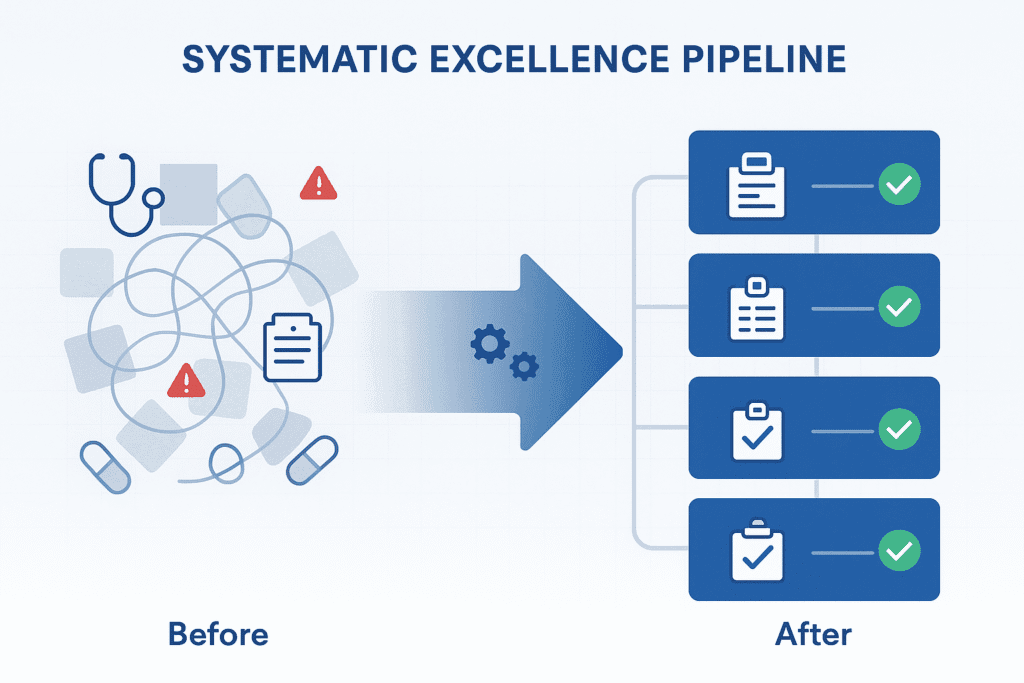
Clinical operations standardization is all about creating systematic, repeatable processes that reduce risk for your practice, improve patient outcomes, and demonstrate operational excellence to potential buyers. Think of it like the difference between a well-organized, efficient restaurant kitchen where every dish comes out perfectly versus a chaotic one where quality depends entirely on which chef is working that day. Buyers want the predictable, efficient kitchen.
Key Insight: Practices with robust standardization frameworks command premium valuations because buyers can confidently project future performance without operational uncertainty.
What is standardization in operations?
Standardization in operations means establishing consistent, documented procedures that ensure every team member performs tasks the same way, every time. Instead of relying on individual knowledge or varying approaches, you create systematic methods that anyone can follow to achieve predictable results. You can think of operational standardization like a well-designed assembly line. Your standardized clinical operations ensure every patient receives consistent care regardless of which provider or staff member serves them.
For medical practices, standardization directly impacts three areas that buyers care about most: risk reduction, quality consistency, and scalability potential. When your operations are standardized, you reduce the risk of medical errors, ensure consistent patient experiences, and create systems that can grow with new ownership.
Critical Factor: Operational uncertainty from lack of standardization typically reduces practice valuations by 15-25% due to increased buyer risk assessment.
What are clinical standard operating procedures?
Clinical standard operating procedures (SOPs) are detailed, written instructions that specify exactly how clinical tasks should be performed in your practice. Your clinical SOPs serve as the operational blueprint for your practice. They document who does what, when they do it, how they do it, and what standards must be met.
During due diligence, buyers use your SOPs to assess operational maturity and risk exposure. Comprehensive SOPs demonstrate that your practice can maintain quality standards during ownership transitions, staff changes, and growth phases. Practices with comprehensive operational procedures experience smoother due diligence processes because buyers can quickly understand how the practice functions and assess operational risks. This transparency typically leads to faster deal closure and more favorable transactions.
What are standardized protocols in medical practice?
Standardized protocols are evidence-based guidelines that dictate how your clinical team approaches specific medical conditions, procedures, or patient populations. Unlike SOPs that focus on task execution, standardized protocols guide clinical decision-making to ensure consistent, high-quality patient care.
Your standardized protocols translate medical best practices into practical workflows for your specific practice setting. For instance, your diabetes management protocol might specify blood glucose monitoring schedules, medication adjustment criteria, patient education requirements, and follow-up timing. These protocols ensure every diabetic patient receives evidence-based care regardless of which provider sees them.
Risk Reduction: Standardized clinical protocols can reduce malpractice risk by up to 40% while supporting quality metrics that drive value-based care bonuses.
What are examples of standardization that increase practice value?

Effective standardization in medical practices takes many forms, each contributing to operational excellence and enhanced practice value. Here are specific examples that demonstrate the breadth and impact of clinical operations standardization:
Patient Flow Standardization: Your appointment scheduling protocols specify optimal visit types and durations, check-in procedures include standardized paperwork and verification steps, and clinical workflows ensure consistent room utilization and provider efficiency.
Clinical Documentation Standardization: Your electronic health record templates ensure consistent information capture, clinical note formats follow standardized structures that support billing and quality reporting, and documentation timing requirements are clearly specified. Standardized documentation enhances practice sale readiness by providing clear operational records for buyers.
Medication Management Standardization: Your prescription protocols specify preferred drug formularies and dosing guidelines, medication reconciliation procedures ensure patient safety during visits, and pharmacy communication follows established workflows. These standardized approaches reduce medication errors by up to 50% while demonstrating quality-focused operations to potential buyers.
Quality Assurance Standardization: Your quality monitoring programs include regular chart reviews using standardized criteria, patient satisfaction surveys follow consistent methodologies, and clinical outcome tracking uses established metrics. Practices with robust quality assurance systems typically command higher valuations because buyers can verify performance claims through documented results.
Regulatory Compliance Standardization: Your HIPAA procedures ensure consistent privacy protection, infection control protocols meet current CDC guidelines, and staff training programs follow standardized curricula with documented competency assessments. Standardized compliance programs reduce regulatory risk and simplify due diligence processes during practice sales.
Compliance Advantage: Practices with documented compliance standardization experience 60% fewer regulatory issues during due diligence reviews.
Building your clinical operations standardization framework
Start with your highest-impact clinical areas where standardization can immediately improve operational efficiency. Focus on medication management procedures, patient intake protocols, and clinical documentation standards. These foundational elements create the backbone for broader standardization efforts. You should also document your current processes before implementing changes, and engage your clinical team in standardization development (along with clear success metrics) to ensure buy-in and practical applicability.
Successful standardization is an iterative process that thrives on results and feedback. At SovDoc, we specialize in helping healthcare practices optimize their operations for successful M&A transactions. Our team understands exactly what buyers look for in clinical operations standardization and can help you develop the frameworks that drive premium valuations.
Contact SovDoc today to schedule a confidential consultation about your practice’s standardization readiness and transaction potential. Let us help you transform your operational excellence into measurable practice value that positions you for M&A success.